Home · Photograph dossiers
Pictures, and later checks
Photograph dossiers
This page describes famous pictures and what later checks found. It does not reproduce copyrighted “monster” photographs, and it does not add a drawing of a creature.
Dossier 1 · 19 April 1934
The “Surgeon’s Photograph”
In 1994, the BBC records, the most famous of the published photographs — taken by Colonel Robert Wilson on 19 April 1934 — was revealed to be a hoax.1 The same report says the 1934 “Surgeon’s Photograph” was, sixty years later, confirmed as a hoax hatched in revenge after a newspaper ridiculed journalist Marmaduke Wetherell for finding “Nessie footprints” on the shore. The “monster” caught on camera was apparently a toy submarine bought from Woolworths, with a head fashioned from wood putty, and the hoaxers then gave the photograph to Wilson.2
The picture itself is not shown here. It is still widely circulated, and the later check — a toy submarine with a wood-putty head — is the part this site can stand over with a named source.
Dossier 2 · 1970s
A flipper, a name, and an enhancement
It also records that in the 1970s a photograph taken by Dr Robert Rhines — the BBC’s spelling — attracted worldwide attention and seemed to show a flipper or fin. The creature was given the scientific name Nessiteras rhombopteryx by Sir Peter Scott. The BBC notes that the name is also an anagram of “Monster hoax by Sir Peter S,” and that the image was later revealed to have been computer enhanced.1
Dossier 3 · A tradition, given fairly
St Columba and a “water beast”
BBC News traces the story back 1,500 years, when the Irish missionary St Columba is said to have encountered a beast in the River Ness in 565 AD. That is a reported tradition about a river encounter, given here with the later newspaper history, not as proof of an unknown animal in the loch.2 The Gazetteer notes a much earlier story: St Columba (521–597) is said to have subdued a mysterious “water beast.” The site treats that as a reported tradition, not as a zoological record.3
These are reported traditions about a holy man and a river or loch beast, written down long after the fifth and sixth centuries. They are part of how the story is told, and they are not a modern natural-history record of the loch.
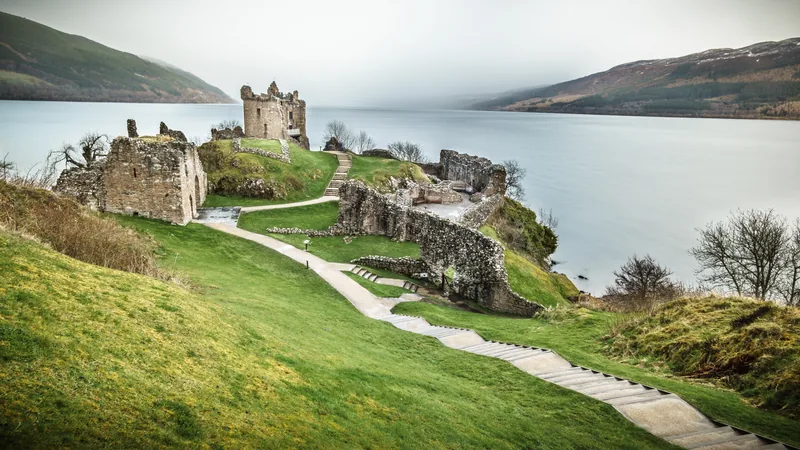
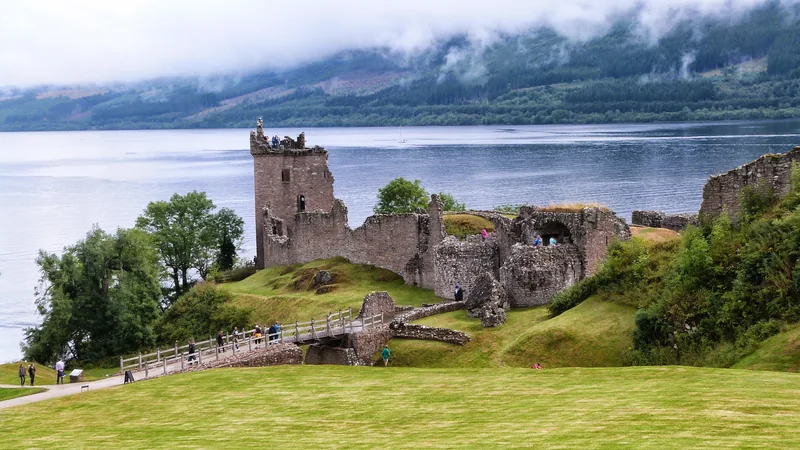
The photographs on this site are of the loch and of Urquhart Castle, all CC0 or CC BY, and credited.